

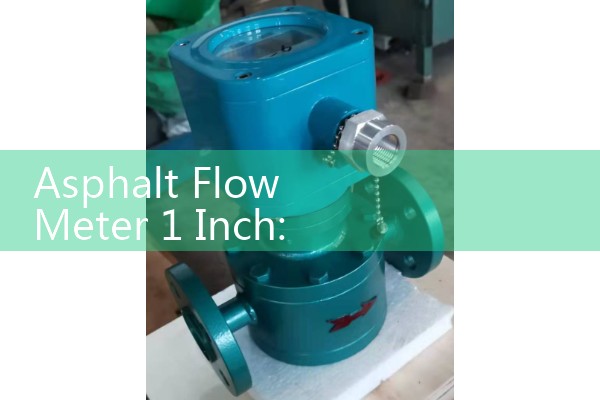
『Asphalt Flow Meter 1 Inch: Small Batch Heating and Clogging Prevention Rules』Related information(clamp on meter|electromagnetic meter|venturi meterrotameter|orifice meter|ultrasonic flow meter|mass flow meter|coriolis mass flow meter|coriolis flow meter|magnetic flow meter|magmeter flow meter|magflow flow meter|mag meter flow meter|electromagnetic flow meter|vortex flow meter|turbine flow meter|thermal mass flow meter|thermal flow meter|rotameter flow meter)
 ```html
Asphalt Flow Meter 1 Inch: Small Batch Heating and Clogging Prevention Rules
Quick Answer: A 1-inch flow meter on asphalt service clogs when the fluid cools inside the measuring chamber. Keep the meter body above 150 °C by tracing jacket temperature, not just inlet pipe temperature. Use oval gear or Coriolis meters with full jacket heating and dead‑stop flushing if your batches are under 500 litres.
Why a 1‑Inch Meter Looks Right but Clogs Daily
Most engineers size a meter for 1–3 m³/h of bitumen and land on DN25. The maths checks out. The real problem is the time between batches.
A customer in central Vietnam ran 200‑litre batches of polymer‑modified bitumen every 90 minutes. Their 1‑inch oval gear meter seized after three batches. The pipe was heat‑traced at 170 °C, but the meter body sat at 112 °C between runs. Bitumen with 4 000 cP at 160 °C turns to paste at 110 °C. The rotors cannot shear it.
Here is the thing. Pipe tracing alone does not save a small meter. A 1‑inch body loses heat two to three times faster than a DN50 flange. You need dedicated jacket heating on the measuring unit, not just the upstream spool.
Heating Rules That Prevent Clogging on Small Batch Asphalt
Rule 1. Heat the meter cavity, not just the inlet. Use a full jacket oval gear meter like the Silver Instruments SIL-OG-J series or a jacketed Coriolis sensor. The jacket must wrap the measuring chamber and the bearing housing. Tracing only the inlet pipe leaves the rear cover cold. That is where solidification starts.
Rule 2. Control jacket surface temperature, not fluid temperature. On a 1‑inch meter for penetration‑grade 60/70 bitumen, we set the jacket PID controller at 165 °C minimum. The fluid inside the chamber will sit 10–15 °C lower. Measure the outer case with a contact PT100 once per shift. If the case drops below 145 °C, you are building hardened skin on the rotor tips.
Rule 3. Dead‑stop flushing must be manual and short. A solvent‑flush loop that triggers automatically after every batch sounds safe. In practice, a 1‑inch line filled with cold diesel shrinks the internal clearance by 0.02–0.04 mm. That is enough to score rotors. We recommend a manual push‑button flush that runs for exactly 8–10 seconds with pre‑heated solvent only.
Rule 4. Batch volume below 300 litres demands a zero‑leak check valve. Small batches mean the meter stands full for most of the hour. Back‑flow of cooling bitumen into the chamber is the top reason for morning seizure. Install a spring‑loaded PTFE‑seated check valve directly on the meter outlet. Do not rely on a ball check 2 metres downstream.
Meter Types That Actually Work on 1‑Inch Asphalt Lines
We have tested three meter principles on small asphalt batching in Southeast Asia and the Middle East. Oval gear meters survive if the jacket is sized correctly. A 1‑inch SIL‑OG‑J with 1 MPa steam tracing runs for months without opening. Coriolis mass flow meters like the SIL‑CMF‑025 give you mass total plus density, but they need a zero‑flow cut‑off above 0.5 % of rate to ignore thermal noise during standby.
Inline turbine meters fail fast. The bearing cavity traps cold product. Thermal mass meters with insertion probes give you a relative reading because the heat‑transfer coefficient changes with oxidation. For custody custody‑transfer of cutback bitumen or emul
Customer Case: Paint Factory Batch Blending in Mexico
A roof‑coatings plant in Monterrey switched from a bare 1‑inch gear meter to a jacketed SIL‑OG‑J after losing 14 hours of production in one month. Their batch size was 250 litres of oxidised bitumen at 185 °C. The meter jacket was fed with thermal oil at 190 °C from the same skid that heated the mixing tank. After the change, 12 months passed with zero unplanned stops. The purchase department had already tried a "cheaper" meter without a jacket. The savings disappeared in lost production after six week.
Quick Parameters to Specify
When you ask for a quote, give us the following real values. Do not copy from a datasheet.
Fluid type: straight‑run bitumen, polymer‑modified, or cutback. PMB with SBS polymer needs 5–8 °C higher jacket temperature.
Viscosity at pumping temperature: e.g. 800 cP at 160 °C, not at 60 °C.
Batch size in litres: this decides the jacket start‑up strategy.
Flush medium: diesel, kerosene, or RME.
Hazardous area: ATEX Zone 1 or Zone 2, gas group IIB or IIC.
Output requirement: 4–20 mA HART only, or pulse for batching plus HART.
Send your pressure in bar, temperature in °C, pipe size (DN), and flow range to [email protected]. Our engineers will propose a heating layout drawing with the quote, not just a price. We ship jacketed 1‑inch meters to asphalt terminals in Saudi Arabia, emulsion plants in Colombia, and waterproofing factories in Indonesia every quarter.
FAQ About 1‑Inch Asphalt Flow Meters
Can I use a 1‑inch Coriolis meter without a jacket if the flow never stops?
No. Even with continuous flow, the sensor tubes cool during zero‑check cycles or night shifts. A customer in Abu Dhabi learned this the hard way after a 30‑minute power dip hardened product in the twin tubes. Full‑jacket versions cost more but avoid a total sensor replacement.
What is the smallest flush volume that keeps a 1‑inch meter clean?
3 to 4 times the internal volume of the meter chamber. For a 1‑inch oval gear meter with 0.15 L internal volume, 0.5 L of hot diesel pushed at 1 bar is enough. Use a hand valve, not a solenoid, so the operator feels resistance.
Can I heat trace with electricity instead of steam or thermal oil?
Yes, if you use a 200 °C silicone jacket with a PT100 surface sensor. The risk is local hot spots that crack the carbon‑filled PTFE rotors. We limit electric tracing to 0.8 W/cm² on oval gear meters. Coriolis meters usually specify steam or oil only.
How often should I open the meter for inspection?
Every 6 months for PMB, every 12 months for straight‑run bitumen. If you see black powder on the rotor tips, your flush is too cold. Raise flush medium temperature by 15 °C.
Does Silver Instruments stock 1‑inch jacketed meters?
We keep SIL‑OG‑J DN25 and SIL‑CMF‑025 jacketed versions in our Brisbane hub. Standard delivery is 2 weeks. ATEX‑certified builds take 4 weeks. Ask for the Asphalt Starter Kit that includes a matched check valve and PT100 surface sensor.
Visit flow-meter.com.au and search "asphalt meter jacket" for drawings and installation photos from real customer sites in Vietnam, Mexico, and the UAE.
``` Hot Blog
 Related AD