

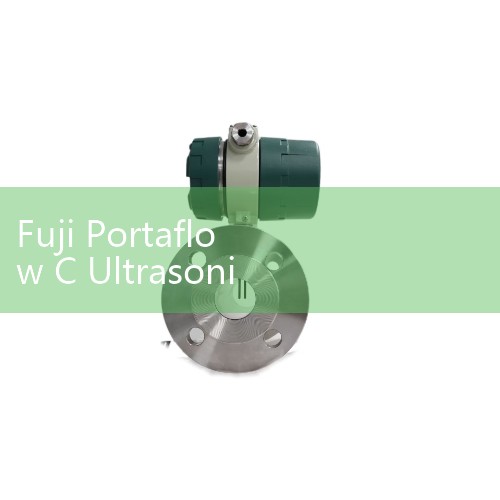
『Fuji Portaflow C Ultrasonic Flow Meter Calibration: Field Signal Optimization and Gel Setup』Related information(clamp on meter|electromagnetic meter|venturi meterrotameter|orifice meter|ultrasonic flow meter|mass flow meter|coriolis mass flow meter|coriolis flow meter|magnetic flow meter|magmeter flow meter|magflow flow meter|mag meter flow meter|electromagnetic flow meter|vortex flow meter|turbine flow meter|thermal mass flow meter|thermal flow meter|rotameter flow meter)
Fuji Portaflow C Ultrasonic Flow Meter Calibration plus Field Signal Optimization and Gel Setup
Quick Answer: A good Fuji Portaflow C calibration starts with clean pipe surface, correct transducer spacing, and a stable gel layer. Keep the signal strength above 60 percent during the field setup. If the value drifts, check the acoustic coupling and transducer cable first. Then adjust the flow calibration factor.
The Fuji Portaflow C is a portable clamp-on ultrasonic flow meter used in water, HVAC, and process audits. Engineers often blame the meter when readings jump. Here is the thing. The electronics are rarely the problem. Transducer placement and pipe condition cause most field errors. Gel application is the second big factor. We have seen this on customer sites many times.
Silver Automation Instruments is a flow meter manufacturer and supplier for customers in Southeast Asia, the Middle East, Latin America, Africa, and Oceania. Our team also helps users with clamp-on ultrasonic flow meter selection and onsite signal checks. This guide covers calibration basics, signal optimization, and gel setup for the Fuji Portaflow C.
Signal Strength Basics for Fuji Portaflow C
Signal strength on the Portaflow C appears as a percentage or a bar value. A reading below 40 percent often produces unstable flow totals. Most engineers skip this part and then wonder why the totalizer does not match the plant meter. Keep the signal above 60 percent before you record any flow value.
Pipe material changes the acoustic path. Carbon steel and stainless steel pass the signal well. Concrete, fiberglass, and old corroded pipes weaken the signal. If the pipe has a liner, enter the liner material and thickness in the setup menu. A wrong liner value offsets the transducer spacing by several millimetres. That small error can drop the signal by half.
For pipes below DN50, switch to a smaller transducer set or use the correct mounting rail. A loose rail lets the transducer move after setup. Tighten the rail and mark the position with a marker. We have seen good meters produce bad data because the rail slipped by 5 mm.
Gel Setup and Transducer Coupling
Acoustic gel removes the air gap between the transducer face and the pipe wall. Do not use petroleum grease or silicone sealant. They dry out or create air pockets. Use a water based acoustic coupling gel or a solid couplant pad for high temperature pipes.
Clean the pipe with a wire brush first. Remove paint, rust, and loose scale. A smooth surface with a thin gel layer works better than a rough surface with thick gel. Apply a strip of gel along the transducer face. Press the transducer against the pipe and move it side to side once. That spreads the gel and pushes out trapped air.
If the signal is weak, lift the transducer and apply fresh gel. Old gel on a hot pipe dries within 20 minutes. On pipes above 60 degrees Celsius, check the gel every 10 minutes. Use high temperature couplant for surface temperatures above 100 degrees Celsius.
One customer in Vietnam ran a clamp-on meter on a chilled water line without cleaning the pipe. The signal stayed at 30 percent. After wire brushing and fresh gel, the signal jumped to 75 percent. The meter was fine. The setup was not.
Field Calibration Routine
Calibration for a clamp-on ultrasonic flow meter does not mean sending the unit to a lab every time. It means matching the field parameters to the actual pipe and fluid. Enter the pipe outer diameter, wall thickness, pipe material, liner, fluid type, and temperature. Do not trust the pipe nameplate. Measure the outer diameter with a calliper. Measure wall thickness with an ultrasonic thickness gauge if possible.
Set the flow range close to the actual process flow. A range that is too wide reduces resolution. A range that is too narrow causes the output to clip at 20 mA. For a 100 mm water line running at 50 cubic metres per hour, set a full scale near 80 cubic metres per hour. This give
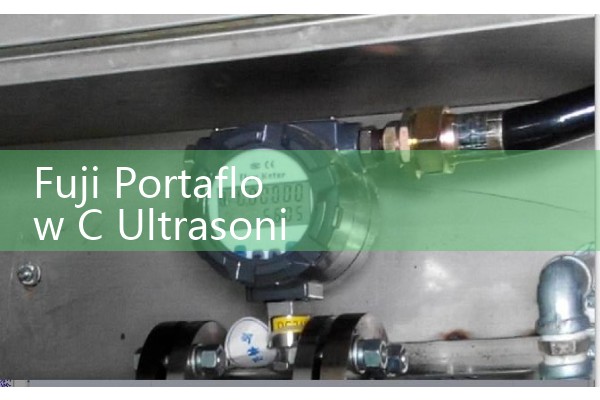
Check the zero point when the pipe is full and flow is stopped. A drifting zero usually means air bubbles or particles in the fluid. Let the flow settle before you write down the zero offset. On a wastewater line in the Philippines, a drifting zero came from sludge coating the transducer face. Cleaning solved it. No factory calibration was needed.
Field Signal Optimization Checklist
Most signal faults follow a pattern. Check the transducer spacing first. Then check the cable connections. Then check the gel. A bent cable or a loose connector drops the signal even with perfect gel. Run the diagnostic waveform screen if the Portaflow C has that function. A flat waveform means no signal path. A noisy waveform means air or solids in the fluid.
The fluid itself matters. Clean water gives a strong signal. Slurries, heavy oil, and liquids with more than 3 percent solids weaken the signal. Fluids with viscosity above 100 cP can also reduce acoustic transmission. In that case move the transducer to a pipe section with full flow and minimal turbulence. Avoid positioning the transducers on top of a horizontal pipe because air collects there. Mount them on the side of the pipe, between the 9 o clock and 3 o clock positions.
For glycol or seawater, adjust the fluid sound speed in the advanced menu. Default water settings do not work for every liquid. A seawater flow meter for a desalination plant needs the correct salinity value and conductivity around 50,000 µS/cm. Otherwise the flow reading can be off by 2 percent or more.
When to Replace an Aging Fuji Portaflow C
The Fuji Portaflow C is a portable unit and many units in the field are now over 10 years old. Spare transducers and cables become expensive. If the display backlight fails, the battery runtime drops below 2 hours, or the signal stays below 40 percent after full setup, replacement may cost less than repair.
Silver Automation Instruments supplies clamp-on ultrasonic flow meters and portable flow meter options for water, wastewater, and process audits. Our units accept the common field parameters and support 4-20 mA HART or RS485 output. For oil and chemical lines, we also offer Coriolis mass flow meters and oval gear flow meters.
Send us your pipe size (DN), fluid type, temperature (°C), pressure (bar), and flow range. We will recommend a suitable clamp-on flow meter or portable ultrasonic flow meter. Contact Silver Automation Instruments at Tel +86-25-68650347, WhatsApp +86-25-52155837, or WeChat +86 15365082610.
FAQ
Q: What signal strength should a Fuji Portaflow C show during calibration?
A: Keep the signal above 60 percent for stable flow readings. Below 40 percent causes poor repeatability. If the value is low, check transducer spacing and gel coupling first.
Q: Which gel works best for a Fuji Portaflow C on hot pipes?
A: Use a water based acoustic coupling gel for normal pipes. For surface temperatures above 100 degrees Celsius, use a high temperature couplant or solid pads. Do not use petroleum grease.
Q: How often do we need to calibrate a clamp-on ultrasonic flow meter?
A: Verify field parameters before each measurement campaign. Factory calibration is usually not needed unless the transducer or cable changes. Check the zero point when flow is stopped.
Q: Can a Fuji Portaflow C measure flow on a pipe with a liner?
A: Yes. Enter the liner material and thickness in the setup menu. Wrong liner data shifts the transducer spacing and weakens the signal. Measure the liner thickness when possible.
Q: Does Silver Automation Instruments supply replacement portable ultrasonic flow meters?
A: Yes. We supply clamp-on ultrasonic flow meters and portable flow meters for water, wastewater, and industrial processes. Send us the pipe size and flow range for a specific quote.
 Hot Product
 Related AD