

『Flow through Venturi Meter Layout: Upstream and Downstream Straight Pipe Run Diameter Standards』Related information(clamp on meter|electromagnetic meter|venturi meterrotameter|orifice meter|ultrasonic flow meter|mass flow meter|coriolis mass flow meter|coriolis flow meter|magnetic flow meter|magmeter flow meter|magflow flow meter|mag meter flow meter|electromagnetic flow meter|vortex flow meter|turbine flow meter|thermal mass flow meter|thermal flow meter|rotameter flow meter)

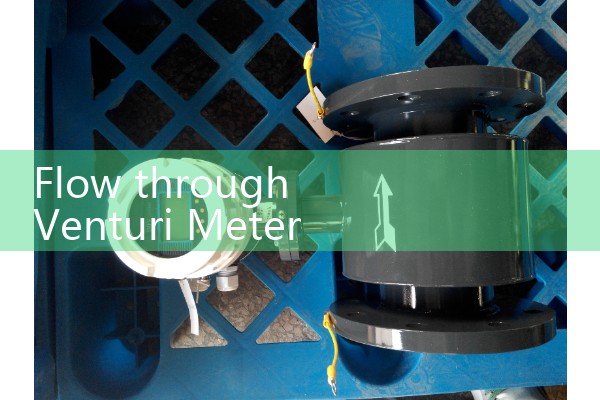
Flow through Venturi Meter Layout: Upstream and Downstream Straight Pipe Run Diameter Standards
Quick Answer: A Venturi flow meter needs 10D to 30D of upstream straight pipe run depending on beta ratio, pipe fittings and flow disturbances. Downstream straight run usually needs 4D to 8D. Send us your pipe size in DN, pressure in bar, temperature in degrees C and flow range and we will confirm the right layout for your site.
Why Straight Pipe Run Matters for a Venturi Flow Meter
A Venturi meter measures flow by reading differential pressure across a controlled reduction in pipe diameter. The accuracy depends on a stable fully developed velocity profile at the inlet. Elbows, valves, tees and reducers create swirl or asymmetry. A straight pipe run lets the velocity profile settle before the fluid reaches the Venturi inlet.
Here is the thing. Many installers treat straight pipe run as a suggestion. We have seen wastewater plants in Vietnam and food factories in Thailand with less than 6D upstream and unstable readings. The meter still works but repeatability drops. For billing or batch control repeatability matters more than the initial price.
Because the upstream velocity profile controls accuracy, short straight runs are a common source of error. Most engineers skip this part. They focus on flange rating and beta ratio. Straight run is the first thing we check on a new site.
Upstream Straight Pipe Run Standards
Upstream straight run is expressed in D units. D means the actual inside diameter of the pipe. For a DN100 pipe one D equals 100 mm inside diameter, not outside diameter or nominal flange size.
A typical Venturi flow meter with beta ratio from 0.4 to 0.6 installed after a single 90 degree elbow may need 12D to 20D upstream. After two elbows in different planes the requirement can rise to 25D or 30D. After a partially open control valve the requirement can exceed 30D unless you use a flow conditioner.
We usually tell customers to start with 20D upstream for liquid and steam applications when space is not limited. For gas applications with high velocity or pulsating flow use 25D to 30D. For a DN80 Venturi on compressed air at 7 bar the velocity profile recovers slower because of density variation. Give it 25D upstream if you can.
Downstream Straight Pipe Run Requirements
Downstream straight run is shorter because the pressure taps and throat already did the measurement. The fluid leaving the Venturi expands and creates turbulence but the downstream turbulence does not affect the differential pressure reading as much as upstream swirl. Standards commonly ask for 4D to 8D downstream.
In practice 5D downstream is enough for most water and chemical lines. For steam and gas with high velocity use 8D downstream to avoid pressure recovery instability. A food plant in Malaysia had a DN65 Venturi on CIP water with only 3D downstream before a tee. The flow total shifted by 2 percent when the spray ball pattern changed. Adding a 6D straight section fixed it.
Layout Rules for Different Pipe Sizes
Pipe size changes the physical length of D. A DN50 line with 20D upstream needs 1000 mm. A DN300 line with 20D upstream needs 6000 mm. That is why large pipe layouts often require more planning than small pipe runs.
For DN15 to DN40 Venturi meters the straight run numbers are the same in D but the physical length is small. Most panels can fit 20D without trouble. For DN150 and larger the straight run becomes a layout problem on skids and in pump rooms. Use the inside diameter not the schedule pipe outer diameter when calculating.
We saw a desali
How to Reduce Straight Run in Tight Spaces
Some installations cannot fit 20D or 30D. A flow conditioner or straightening vane can reduce the required upstream length to about 8D to 10D depending on type. The flow conditioner removes swirl and rebuilds a flatter velocity profile before the Venturi inlet.
Do not place the flow conditioner too close to the Venturi. Keep at least 5D between the conditioner outlet and the Venturi inlet. For a DN200 chilled water line in the Philippines we used a tube bundle conditioner and 10D upstream total. The meter passed a site verification against a clamp on ultrasonic meter within 0.9 percent.
Venturi Meter Layout Checklist
Measure pipe inside diameter in mm and convert to D. Identify every fitting within 30D upstream of the Venturi. Count elbows and note if they are in plane or out of plane. Check if a control valve or pump sits upstream. Add 25D to 30D for control valves or two elbows out of plane. Keep 4D to 8D downstream before any tee or valve. If space is tight add a flow conditioner and target 10D upstream with 5D between conditioner and meter.
Recommended Meter and Transmitter Pairing
Silver Automation Instruments supplies Venturi flow meters for water, steam, gas and chemical service. For most industrial lines we pair the Venturi primary element with a Silver Instruments differential pressure transmitter with 4-20 mA HART output and display. For ATEX Zone 1 gas service Silver Instruments offers approved differential pressure transmitters.
For temperature compensated steam or gas flow add a PT100 sensor and a flow computer or paperless recorder. Send us your pressure in bar, temperature in degrees C, pipe size in DN and flow range in kg/h or m3/h. We will size the Venturi throat, beta ratio and straight pipe run for your application. A customer in Brazil recently gave us 6 bar compressed air, DN100 pipe and 800 m3/h normal flow. We supplied a beta 0.6 Venturi with 25D upstream straight run and a DP transmitter ranged 0 to 60 kPa.
FAQ
What is the minimum upstream straight pipe run for a Venturi flow meter?
The minimum depends on fitting type and beta ratio. A single elbow before a beta 0.5 Venturi may need 12D to 16D. Two elbows out of plane or a control valve can require 25D to 30D or a flow conditioner.
Does downstream straight pipe length affect Venturi meter accuracy?
Yes but less than upstream length. Keep 4D to 8D downstream to prevent pressure recovery instability. For gas and steam use 8D where possible.
Can I install a Venturi meter after a control valve?
You can but do not put the Venturi directly after the valve. Use 30D upstream or install a flow conditioner and keep about 10D upstream. The valve creates swirl and jetting that destroys the velocity profile.
What D dimension should I use for straight pipe calculation?
Use the actual inside diameter of the pipe in mm. For a DN100 pipe D is about 100 mm depending on schedule. For a DN300 pipe 20D means about 6000 mm of straight pipe.
How do I confirm the right Venturi meter layout for my site?
Send Silver Instruments your pipe size in DN, pressure in bar, temperature in degrees C and flow range in kg/h or m3/h. We will provide the required straight run, throat sizing and differential pressure range. Call +86-25-68650347 or WhatsApp +86-25-52155837. WeChat: +86 15365082610.
 Hot Product
 Related AD