

『Coriolis vs Thermal Mass Flow Meter: Tube Vibration vs Boundary Layer Heat』Related information(clamp on meter|electromagnetic meter|venturi meterrotameter|orifice meter|ultrasonic flow meter|mass flow meter|coriolis mass flow meter|coriolis flow meter|magnetic flow meter|magmeter flow meter|magflow flow meter|mag meter flow meter|electromagnetic flow meter|vortex flow meter|turbine flow meter|thermal mass flow meter|thermal flow meter|rotameter flow meter)
Coriolis vs Thermal Mass Flow Meter: Tube Vibration vs Boundary Layer Heat
Quick Answer: A Coriolis meter measures mass flow through a vibrating tube and works best for liquids, slurries, and high accuracy batching. A thermal mass flow meter measures heat removal from a heated sensor and works best for clean gases such as compressed air, nitrogen, and natural gas. If you measure liquid, choose Coriolis. If you measure gas on a budget, choose thermal.
What Each Technology Actually Measures
A Coriolis mass flow meter vibrates one or two tubes. Fluid enters the tube. The fluid mass causes a phase shift between the inlet and outlet side of the tube. That phase shift is directly proportional to mass flow. The meter does not need pressure or temperature compensation for mass flow.
A thermal mass flow meter uses two PT100 sensors. One sensor measures the gas temperature. The other sensor is heated. Gas flows past the heated sensor and removes heat. The signal change is proportional to mass flow. This method works well for gases with a known heat capacity. It is not intended for liquids.
Key Performance Differences
Accuracy: Coriolis meters from Silver Instruments deliver plus or minus 0.1 to 0.2 percent of reading for liquids. Thermal mass flow meters deliver plus or minus 1 to 2 percent of full scale for gases. That gap matters in custody transfer, batch charging, and chemical dosing.
Pressure drop: Coriolis tubes have a smaller internal diameter and create some pressure loss. Thermal meters use a straight flow body or insertion probe and add very little pressure drop. For low pressure gas lines under 1 bar, thermal is often the easier option.
Turndown ratio: Thermal meters have a high turndown ratio, often 100 to 1. Coriolis meters can reach 20 to 1 or 50 to 1 depending on sensor design. For variable gas loads, thermal gives more flexibility.
Fluid and Application Fit
In practice, most engineers start with the fluid. Coriolis meters handle liquids, gases, and slurries. They are common in food and beverage, chemical dosing, palm oil, bitumen, and seawater desalination. A customer in Vietnam uses a DN15 Coriolis meter to dose sodium hydroxide into a treatment line. The meter handles 0 to 500 kg/h. No bypass line is needed.
Thermal mass flow meters are built for clean gases. We have seen them in compressed air systems in Australia, natural gas boiler feed in Mexico, biogas from palm oil mills in Malaysia, and nitrogen blanketing in chemical plants. They are not a good fit for liquid or wet gas.
Installation and Maintenance
Coriolis meters need stable supports and low vibra
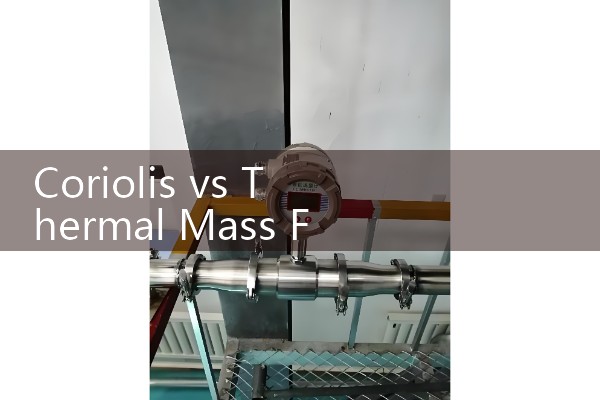
Maintenance depends on the fluid. Coriolis tubes can collect coating inside. Thermal sensors can collect oil or dirt from compressed air. For compressed air, install a filter upstream. For liquid Coriolis, plan for cleaning-in-place if you run food products.
Cost and Purchase Logic
Thermal mass flow meters usually cost less than Coriolis meters in gas service. A thermal meter for a DN50 air line could be half the price of a Coriolis meter for the same pipe. But if you need to measure a liquid mixture or hit custody transfer accuracy, the Coriolis is the right investment.
Do not choose a thermal meter for liquid. Do not choose a Coriolis meter only because it is accurate. Match the meter to the fluid and the data you actually need.
Frequently Asked Questions
Q: Can a thermal mass flow meter measure liquid?
A: No. Thermal mass flow meters are designed for clean gases. Liquids have much higher heat capacity and can cause unstable readings.
Q: Can a Coriolis meter measure natural gas?
A: Yes. Coriolis meters can measure gas mass flow, but the pressure drop and cost are often higher than a thermal meter for the same gas line. For natural gas distribution, thermal is more common.
Q: Which meter has better accuracy?
A: Coriolis meters have better accuracy for liquids, typically 0.1 to 0.2 percent of reading. Thermal meters are about 1 to 2 percent of full scale for gases.
Q: Do I need pressure and temperature compensation?
A: No. Both meter types measure mass flow directly. You do not need a separate flow computer for pressure and temperature correction for mass flow.
Q: What pipe sizes are available?
A: Coriolis meters from Silver Instruments cover DN1 to DN300. Thermal mass flow meters cover DN15 to DN200 inline, with insertion probes for larger ducts or stacks.
Send Us Your Flow Data
If you are comparing a Coriolis and a thermal mass flow meter, send us these details: fluid name, flow range, pressure in bar, temperature in degrees C, pipe size in DN, and required accuracy. We will recommend a specific model and send a quotation within 24 hours.
Contact Silver Automation Instruments by phone at +86-25-68650347, by WhatsApp at +86-25-52155837, or by WeChat at +86 15365082610. You can also visit flow-meter.com.au for product data sheets and selection guides.
 Hot Product
 Related AD