

『Oil Flow Meter Repeatability: Eliminating Drift for Consistent Process Outputs』Related information(clamp on meter|electromagnetic meter|venturi meterrotameter|orifice meter|ultrasonic flow meter|mass flow meter|coriolis mass flow meter|coriolis flow meter|magnetic flow meter|magmeter flow meter|magflow flow meter|mag meter flow meter|electromagnetic flow meter|vortex flow meter|turbine flow meter|thermal mass flow meter|thermal flow meter|rotameter flow meter)

Oil Flow Meter Repeatability: Eliminating Drift for Consistent Process Outputs
Quick Answer: Repeatability in an oil flow meter is the ability to reproduce the same output under identical flow, temperature, and pressure. When drift occurs, burner control fails, custody transfer over-charges or under-charges, and batch quality slips. Select the correct meter technology and follow a practical maintenance plan to hold repeatability below ±0.1 percent instead of watching it drift toward ±0.5 percent.
Why Repeatability Often Matters More Than Accuracy in Oil Measurement
Most plant engineers focus on accuracy because the spec sheet highlights it. In reality, for oil blending, burner supply, or custody transfer, repeatability keeps your process stable day after day. An accuracy shift can be offset by a calibration factor. A repeatability drift cannot. The drift changes from hour to hour and is hard to compensate. A heavy fuel oil burner at a food factory in Thailand saw combustion efficiency swing by 4 percent because the flow meter repeatability degraded from 0.1 percent to 0.4 percent. The operator had to manually adjust the air damper every shift.
Common Reasons Oil Flow Meters Lose Repeatability
Temperature swings are the number one enemy. A diesel flow meter installed outdoors in Saudi Arabia can see a 30°C shift between night and day. This changes oil viscosity and volume, pushing repeatability out of limits if the meter lacks temperature compensation. Worn mechanical parts like oval gear rotors or bearings introduce slip and hysteresis. Last year a lubricant blending plant in Vietnam contacted us. They switched from ISO VG 32 to ISO VG 68 oil without recalibrating their oval gear meter. The meter under-reported flow by 1.2 percent. Additive dosing errors ruined a full batch. Gas bubbles in fuel oil also cause false peaks in turbine and ultrasonic meters, destroying repeatability.
Technology Choices and Their Real Repeatability Limits
Coriolis mass flow meters deliver repeatability of ±0.05% of rate for oils from 0.5 cP to 1,000 cP. They measure mass directly, so density changes do not hurt the output. Oval gear positive displacement meters hold ±0.1% to ±0.2% for clean diesel, hydraulic oil, and HFO, but only if viscosity stays in the calibrated band. Vortex flow meters for oil often claim repeatability around ±0.5% to 1% of rate. In practice, many sites see worse results at low flow. Turbine meters can do ±0.1% for light oil but drift rapidly if bearing wear or debris enters. For custody transfer of crude, you almost always see Coriolis or dual oval gear setups with proving systems.
Three Practical Ways to Stop Drift Before It Starts
First, install the meter with a straight run per ISO 5167 or manufacturer guidance. A Coriolis meter tolerates some swirl but
Silver Instruments Oil Flow Meters Built for Repeatability
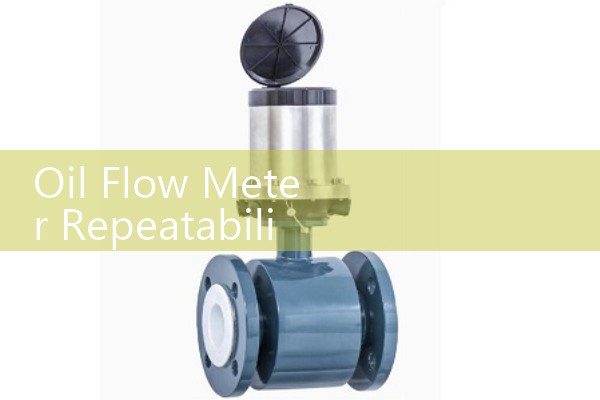
For diesel and heavy oil batching, our OGF series oval gear flow meter (DN15 to DN100) holds repeatability better than ±0.1% under stable viscosity. It handles pressures up to PN40 and temperatures to 150°C. Outputs include 4-20 mA HART, pulse, and Modbus RTU. The meter body is AISI 316 and the rotors are hardened steel with PPS gears for low wear. For crude oil, bunker fuel, or multi-grade blending, our CMF-D Coriolis mass flow meter gives ±0.05% repeatability from DN06 to DN150. It measures mass flow, density, and temperature directly. No need to worry about viscosity shifts. The meter meets ATEX Zone 1 and comes with custody transfer approvals. Send us your oil viscosity (cP), operating temperature (°C), pipe size (DN), and flow range (kg/h). We will run a repeatability analysis and send a quote within 24 hours.
Frequently Asked Questions
Q: How is repeatability different from accuracy?
Accuracy is closeness to a true value. Repeatability is consistency between successive measurements. In oil blending, a meter with 0.2% repeatability and 0.5% accuracy often works better than a 0.2% accuracy meter that drifts.
Q: What causes an oval gear meter to lose repeatability?
Worn bearings, sticky rotor surfaces from heavy oil varnish, and gas slugs are the main culprits. Flush the meter with solvent monthly if you run residual oil.
Q: How often should I check the repeatability of an oil flow meter?
For continuous duty in a burner or blending skid, verify with a master meter every 3 months. After changing oil grade or viscosity, perform a check immediately.
Q: Can a small temperature change ruin repeatability?
A 10°C increase can expand oil volume by about 1 percent. If the meter does not correct for temperature, you will see a steady drift. Use a meter with built-in temperature compensation or manually normalize the reading to 15°C.
Q: Which Silver Instruments meter is best for custody transfer of crude oil?
The CMF-D Coriolis mass flow meter offers traceable calibration, density output, and ±0.05% repeatability. It is accepted for fiscal measurement in many countries.
 Hot Product
 Related AD