Electromagnetic Flowmeter

Do you know the principle of electromagnetic flowmeter? |What are the measurement ranges of electromagnetic flow meters|

Price:¥1.00Quantity:9999

Market Price:¥1.00Reduced Price:¥1.00

Effevtive Time:6/25/2026

Sale Address:SilverProduction Address:Silver automation instruments

Keywords:Do you know the principle of electromagnetic flowmeter? |What are the measurement ranges of electromagnetic flow meters|

Phone:QQ:Click:WhatsApp: +86 18936759191

Company:Guigang Ultrasonic Flow Meter Manufacturer

『Electromagnetic Flowmeter』Related information(clamp on meter|electromagnetic meter|venturi meterrotameter|orifice meter|ultrasonic flow meter|mass flow meter|coriolis mass flow meter|coriolis flow meter|magnetic flow meter|magmeter flow meter|magflow flow meter|mag meter flow meter|electromagnetic flow meter|vortex flow meter|turbine flow meter|thermal mass flow meter|thermal flow meter|rotameter flow meter)

Do you know the principle of electromagnetic flowmeter?

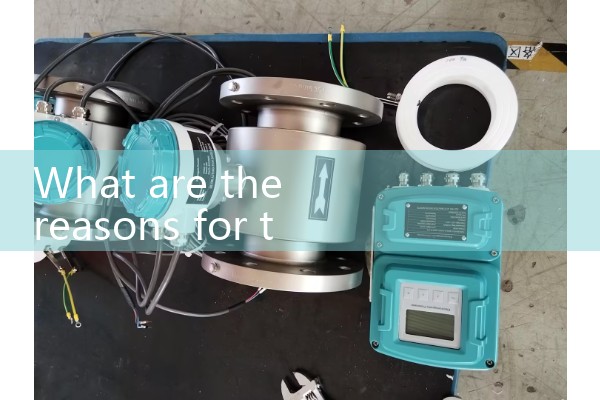
Electromagnetic flowmeter is an instrument for flow measurement based on Faradays law of electromagnetic induction. Its core principles and characteristics are as follows:

1. Working principle Faradays law of electromagnetic induction When a conductive liquid flows vertically in a magnetic field, the charged particles (positive/negative ions) in the liquid will be deflected by the magnetic field, resulting in induced electromotive force (voltage) proportional to the flow velocity on both sides of the pipeline.

. The formula is expressed as: E=B × L × vE: Induced electromotive force (voltage) B: Magnetic field strength L: Inner diameter of the pipeline (electrode spacing) v: Average flow velocity of the liquid. By measuring the induced electromotive force E and combining it with known B and L, the liquid flow velocity v can be calculated, and then the volumetric flow rate can be converted from the cross-sectional area of the pipeline. Structural composition of measuring tube: non-magnetic material (such as stainless steel, polytetrafluoroethylene), lined with insulation material to prevent short circuit. Electrodes: installed in pairs on the inner wall of the measuring tube to detect induced electromotive force. Magnetic field coil: generates a uniform magnetic field perpendicular to the direction of liquid flow. Signal converter: amplifies, processes, and converts weak voltage signals into standard outputs (such as 4-20mA current, pulses, or digital signals).

Secondly, the core advantage is minimal pressure loss. There are no obstacles inside the measuring tube (such as impellers and orifice plates), and the pressure loss can be ignored w
Electromagnetic Flowmeter
hen the fluid passes through, making it suitable for low-pressure conveying systems.

. The ratio of maximum flow rate to minimum flow rate is usually ≥ 20:1, for example, a DN100 pipeline can measure flow rates from 0.5m3/h to 100m3/h, which is suitable for working conditions with large fluctuations. Strong adaptability to pipe diameter, supporting pipelines from DN6 (6mm) to DN3000 (3m), covering measurement needs from laboratory small flow to large industrial pipelines. Linear output and high-precision induced electromotive force exhibit a strict linear relationship with flow velocity, with an accuracy of ± 0.5% or even higher, and excellent repeatability. The medium has wide compatibility and can measure liquids with conductivity ≥ 5 μ S/cm, including acid, alkali, and salt solutions such as sulfuric acid, sodium hydroxide, and saline solution. Water and sewage: domestic sewage, industrial wastewater. Corrosive liquids: hydrofluoric acid, chlorine water, etc. (corrosion-resistant or ridge corrosion resistant electrodes should be selected). Slurry: Mud, slurry, pulp (suspension containing solid particles). 3. Limitations: Cannot measure non-conductive media such as gases, steam, and pure water (conductivity<5 μ S/cm). Due to their lack of conductivity, they cannot generate induced electromotive force and are therefore not applicable. Strict installation requirements require full pipe operation to avoid measurement errors caused by air accumulation. The direction of the magnetic field should be strictly perpendicular to the direction of liquid flow, and strong electromagnetic interference sources should be avoided during installation. When measuring liquids with high viscosity or solid particles, the electrode may be

『SILVER Official Website SERVICE』

Copyright2026SILVER E-Commerce
+86 15365082610