

『Oil Flow Meter Ni-Hard Internals: Toughening Parts Against Scraping Slurry Solids』Related information(clamp on meter|electromagnetic meter|venturi meterrotameter|orifice meter|ultrasonic flow meter|mass flow meter|coriolis mass flow meter|coriolis flow meter|magnetic flow meter|magmeter flow meter|magflow flow meter|mag meter flow meter|electromagnetic flow meter|vortex flow meter|turbine flow meter|thermal mass flow meter|thermal flow meter|rotameter flow meter)
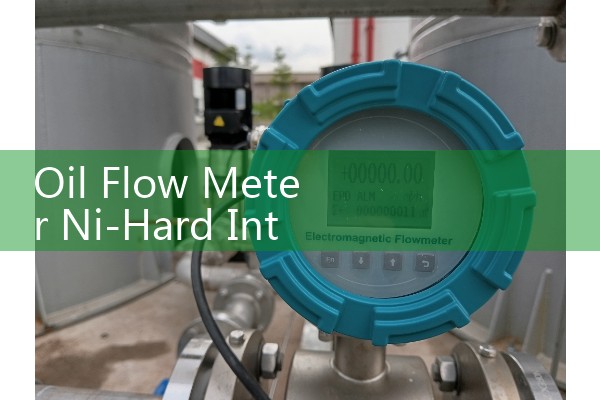
Oil Flow Meter Ni-Hard Internals: Toughening Parts Against Scraping Slurry Solids
Quick Answer: When your crude oil or fuel oil carries sand, scale, or hard catalyst fines, standard flow meter internals wear out fast. Ni-Hard white cast iron rotors and chambers inside an oval gear flow meter can extend service life 3 to 5 times compared to standard steel. Specify Ni-Hard internals from Silver Instruments when you quote, especially for upstream oil fields in the Middle East, Sumatra, or the Niger Delta.
Why Standard Internals Fail in Slurry Oil Service
We have seen this on customer sites many times. A metering skid handles 80 m³/h of blended crude with 0.5% to 1.2% sand content by volume. Standard 316 stainless or carbon steel rotors develop deep scoring grooves within 8 to 12 weeks. The scraping action of hard silica particles eats into the measuring chamber walls. Clearance opens up. The meter starts to slip. Accuracy drops from 0.5% to over 2% without obvious external damage. Once the pulse output starts to drift, the custody transfer or batching system loses trust.
Most engineers skip this part during the first purchase because the upfront price of Ni-Hard appears higher. In practice, replacing a standard oval gear meter three times in one year costs far more in labor, downtime, and lost production. A crude oil terminal in East Kalimantan learned this the hard way. They swapped out six carbon steel meters over 14 months before asking us for a tougher option.
What Is Ni-Hard and How Does It Protect an Oil Flow Meter
Ni-Hard is a family of nickel-chromium white cast irons. The grade we recommend for positive displacement oil flow meters is Ni-Hard 1 or Ni-Hard 2, depending on temperature. Hardness sits between 550 HB and 650 HB in the as-cast condition. That is roughly 55 to 60 HRC. The microstructure contains massive chromium carbides embedded in a martensitic matrix. When slurry solids scrape across the rotor surface, these carbides deflect the wear path. The material does not soften until you exceed 450 °C in some grades, but oil metering rarely goes above 150 °C. So the hardness holds steady throughout the meter life.
Because oval gear flow meters rely on tight mechanical clearance between the rotors and the chamber, any wall loss directly destroys repeatability. Ni-Hard internals keep that clearance stable for months longer in abrasive service. We pair the Ni-Hard rotors with a Ni-Hard or hardened stainless steel chamber. Bearings use tungsten carbide or ceramics to complete the wear protection.
Real Field Data From Silver Instruments Oval Gear Meters
A customer in Papua New Guinea pumps light crude with high silica sand content from a remote well pad. Their pipe size is DN 50, operating pressure 18 bar, temperature 65 °C, flow range 2000 to 8000 kg/h. They asked us to supply an oval gear meter with standard steel rotors first. The meter lost accuracy after 95 running days. We replaced the internals with Ni-Hard rotors and a matched chamber insert. The same meter is still within ±0.5% after 390 days and counting. The maintenance team only cleans the strainer element once a month.
Another scenario we often see is heavy fuel oil bunkering in Southeast Asian ports. The fuel contains catalyst fines from the refining process. Viscosity runs between 180 cSt and 380 cSt at 50 °C, which is already tough on small clearance meters. Add abrasive fines and you get a grinding paste inside the measuring unit. Here, we supply DN 80 oval gear meters with Ni-Hard internals, PT100 temperature compensation, and a 4-20 mA HART output. The transmitter sits inside an ATEX Zone 1 housing because the loading dock is classified hazardous area.
How to Order the Right Meter for Abrasive Oil
When you send a request for quote,
Pipe size (DN15 to DN100 is the typical range for oval gear meters).
Actual flow range in L/h, m³/h, or kg/h.
Fluid viscosity at operating temperature (cP or cSt).
Pressure in bar and temperature in °C.
Solids description: type, estimated particle size in microns, and rough percentage by volume.
Output signal and certification needs (4-20 mA, pulse, HART, ATEX Zone 1 or Zone 2).
Based on that data, we specify the meter model, usually from our OGM series oval gear flow meter range. We confirm whether Ni-Hard rotors and chamber are needed and if additional bearing upgrades make sense. For extremely abrasive streams we also add a hardened filter or strainer upstream. Do not skip the strainer. We insist on this even if your process team resists.
Send us your pressure (bar), temperature (°C), pipe size (DN), and flow range to [email protected] or use the inquiry form on our site. Mention Ni-Hard in the message so the team fast tracks the quote.
Pairing the Flow Meter With Secondary Instruments
A Ni-Hard oval gear meter integrates into a full monitoring loop. We often bundle it with our pressure transmitters and paperless chart recorders. For example, on a diesel loading arm at a depot in Durban, South Africa, we supplied the OGM-DN40 flow meter with Ni-Hard internals, a 0-40 bar pressure transmitter, and a 12-channel recorder. The recorder logs flow rate, total, pressure, and temperature on one screen. Because all instruments use 4-20 mA signals with the same earthing philosophy, noise is low and the batch total matches the tank dip within 0.3%.
If you already have a Coriolis mass flow meter upstream and only need a tough mechanical totalizer on the loading line, the oval gear meter with Ni-Hard works as a standalone batch controller too. Local registers show the volume without any external power.
FAQ
Q: Does Ni-Hard help with chemical corrosion, not just abrasion?
A: No. Ni-Hard fights mechanical wear from scraping solids. It is not a corrosion resistant alloy. For acidic crude or high H²S content, we recommend Hastelloy or duplex stainless internals. Mixing high acidity with abrasive solids usually forces a two-stage solution: coated measuring chambers plus ceramic bearings. Give us the full composition of your fluid.
Q: Can you retrofit Ni-Hard internals into my existing oval gear meter?
A: It depends on the make and model. For Silver Instruments OGM series meters, yes, we sell replacement rotor and chamber kits. For third party meters, we need the original drawings or a sample unit to evaluate. Retrofit kits often cost less than a full new meter.
Q: What is the maximum particle size your Ni-Hard meter tolerates?
A: Our standard oval gear meters handle particles up to 200 microns when equipped with a strainer. For larger particles, we recommend a helical gear or lobe meter design. We screen this during the technical review.
Q: How do I verify the meter is still accurate after months of slurry service?
A: Use a master meter or a calibrated proving tank. We also supply a portable flow calibrator service in parts of Southeast Asia. The pulse output from the oval gear meter makes proving easy. Check the K-factor shift over time. A drift above 1.5% signals the clearance is opening up.
Q: Is there an ATEX certified version with Ni-Hard internals?
A: Yes. Our OGM series with Ni-Hard internals comes with ATEX Zone 1 or Zone 2 certification. The certification covers the housing and electronics, not the internal metallurgy, but the complete assembly meets the required standards. We provide the declaration of conformity with every shipment.
 Hot Blog
 Related AD