

 Current position > News detail
『Oil Flow Meter 25 bar: Heavy Machinery Hydraulic Fluid Monitoring Guidelines』Related information(clamp on meter|electromagnetic meter|venturi meterrotameter|orifice meter|ultrasonic flow meter|mass flow meter|coriolis mass flow meter|coriolis flow meter|magnetic flow meter|magmeter flow meter|magflow flow meter|mag meter flow meter|electromagnetic flow meter|vortex flow meter|turbine flow meter|thermal mass flow meter|thermal flow meter|rotameter flow meter)
Oil Flow Meter 25 bar: Heavy Machinery Hydraulic Fluid Monitoring Guidelines
Quick Answer
For hydraulic fluid monitoring at 25 bar on heavy machinery, positive displacement oval gear meters deliver the most stable readings. They handle viscosity swings from ISO VG 32 to VG 68 without recalibration. A compact DN15 or DN20 meter with a 4-20 mA HART output and a PT100 temperature sensor gives your maintenance team leak detection and energy consumption data in one device.
Why 25 bar Rating Matters for Hydraulic Systems
Most industrial hydraulic systems on excavators, presses, and injection moulding machines run between 100 bar and 350 bar. But flow monitoring loops are often installed in the return line or the pilot control circuit. That is where pressure sits in the 10 bar to 30 bar range. A 25 bar rated oil flow meter fits exactly here. It does not need the 420 bar thick-walled body of the high-pressure side. This keeps cost down without sacrificing safety in the low-pressure part of the system.
We have seen many sites in Malaysia and Indonesia install a 25 bar meter after the cooler and filter. The return oil temperature there is normally 50 °C to 70 °C. The pressure stays steady at about 15 bar to 22 bar. A meter with a 25 bar working limit and a 32 bar burst pressure gives you a safe margin. No over-engineering, no excessive cost.
Which Flow Meter Technology Performs Best
Here is the thing. Hydraulic oil changes viscosity fast. Cold start in a Chilean copper mine can be 5 °C with oil at 400 cP. After 40 minutes, the oil hits 55 °C and drops to 30 cP. Turbine meters drift in this scenario because they are viscosity sensitive. Oval gear meters do not. They trap a fixed volume between two precision gears. Each pocket of oil is the same size regardless of how thick or thin the fluid becomes. Accuracy stays within ±0.5 % of reading. Silver Automation Instruments supplies oval gear meters with NBR or FKM seals for hydraulic fluids. The meter body is cast iron or stainless steel. The bearings are tungsten carbide for long life with dirty oil.
Coriolis meters also work perfectly for hydraulic fluid. They measure mass flow directly and ignore viscosity. But a 25 bar Coriolis meter for a DN10 line costs 4 to 5 times more than an oval gear unit. Most engineers in the heavy machinery sector pick oval gear for budget and reliability.
Real Installation Details That Engineers Appreciate
A typical setup on a 200-ton hydraulic press looks like this. Pipe size DN20, pressure 25 bar, oil type ISO VG 46, flow range 5 L/min to 80 L/min. The meter sits between the return filter and the reservoir. The process connection is G3/4 inch male thread. The transmitter provides a 4-20 mA HART signal wired to a local PLC. A separate PT100 inserted in the meter body reports temperature, so you can correct volume readings or monitor cooler performance. No need for a separate thermowell.
Silver Instruments integrates these meters with a no-display transmitter or with a local LCD showing instantaneous L/min and totalised litres. The pulse output goes straight to an oil consumption panel or a paperless recorder. This data helps the maintenance team compare pump output to return flow and catch internal bypass leaks early. That kind of leak can cost a palm oil refinery in Kalimantan several thousand dollars in wasted hydraulic fluid before anybody notices a temperature rise.
What We Learned from a Hydraulic Press Customer in Vietnam
Last year a customer in Vietnam who runs a metal stamping plant ask
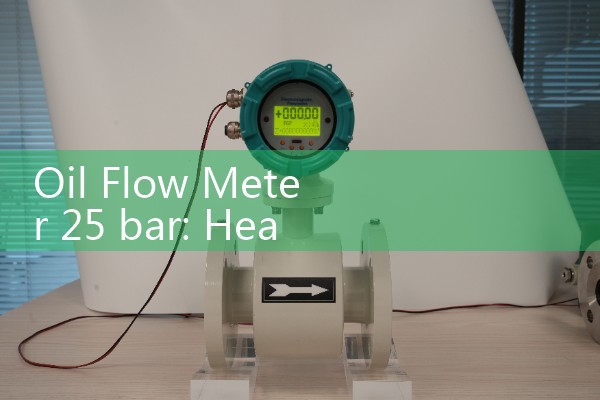
After two weeks the data told the real story. Flow at 200 bar pump pressure was steady at 62 L/min. At 50 bar it was 64 L/min. The pump was healthy. The problem was a relief valve that was cracking open too early and sending hot oil back to the tank. The meter detected the extra return flow during the early part of each cycle. The fix was a valve adjustment, not a pump rebuild. That one meter saved them roughly $7,200 in unnecessary maintenance and downtime.
How to Specify a 25-bar Oil Flow Meter
When you send us an enquiry for a hydraulic oil meter, include these four values. Pressure in bar. Normal operating pressure and any pressure spikes you see during start-stop. Temperature in °C. Minimum cold start temperature and maximum steady state. Pipe size in DN. The actual inner diameter of the return line piping. Flow range in L/min or kg/h. Minimum flow when the system idles and maximum flow when all actuators move at full speed. Also tell us the oil grade, ISO VG 32, 46, or 68. Our engineers match the bearing material, seal elastomer, and clearance to your exact fluid. Do not forget the output signal. Most sites use 4-20 mA HART, a pulse output, or RS485 Modbus. We configure the meter in our Brisbane workshop before shipping to your crew in Dammam, Lima, or Port Moresby.
Send us your pressure, temperature, pipe size, and flow range. You will get a specific model recommendation with a dimensional drawing and a quoted price within one business day. See our oval gear flow meter range at flow-meter.com.au.
Frequently Asked Questions
Can I use a turbine flow meter for hydraulic oil at 25 bar?
Turbine meters are not recommended. Viscosity changes from cold start to operating temperature cause measurement errors up to 3 % or more. Oval gear meters keep error below 0.5 % across a wide viscosity range.
What is the typical accuracy of an oval gear meter with hydraulic fluid?
Silver Instruments oval gear meters achieve ±0.5 % of reading with ISO VG 46 hydraulic oil between 20 °C and 90 °C. Repeatability is ±0.03 %. That level is enough for leak detection and energy monitoring on heavy machinery.
Does viscosity change affect the measurement of an oval gear meter?
The basic displacement stays constant. At very low viscosity below 2 cP the slip between gears increases slightly. For hydraulic oils above 10 cP, the correction is negligible. Most hydraulic fluids stay well above this threshold even at 80 °C.
Can the meter handle pressure spikes above 25 bar?
The 25 bar rating is the maximum working pressure. Short spikes up to 32 bar are allowed without damage. If your return line routinely sees spikes above 30 bar, request a meter body rated for 40 bar or higher. We can provide this with no change to the mechanical internals.
Do you supply explosion proof versions for ATEX Zone 1?
Yes. Silver Automation Instruments offers oval gear meters with ATEX and IECEx certification for Zone 1 gas and dust environments. The transmitter housing is flameproof Ex d. We ship these units to oil and gas hydraulic systems in the Middle East regularly.