

 Current position > News detail
『Krohne Flow Meter Calibration Pdf Requirements: Deciphering Certified Error Curves and K-Factors』Related information(clamp on meter|electromagnetic meter|venturi meterrotameter|orifice meter|ultrasonic flow meter|mass flow meter|coriolis mass flow meter|coriolis flow meter|magnetic flow meter|magmeter flow meter|magflow flow meter|mag meter flow meter|electromagnetic flow meter|vortex flow meter|turbine flow meter|thermal mass flow meter|thermal flow meter|rotameter flow meter)
Krohne Flow Meter Calibration PDF Requirements: Reading Certified Error Curves and K-Factors
Quick Answer: A Krohne flow meter calibration PDF contains certified error curves and K-factor tables. Error curves show measurement accuracy at different flow rates. K-factors convert pulse output to real volume or mass. Silver Automation Instruments supplies industrial flow meters with similar calibration documents for water, chemical, oil and gas, and food service.
Most engineers get a calibration PDF only when an audit fails or a meter reading drifts. That is late. In practice you should read the error curve and K-factor before you install a flow meter. The PDF tells you which flow range is actually certified. It also tells you the bench conditions. If your process runs outside those conditions the numbers change.
We have seen this on customer sites many times. A wastewater plant in Chile installed a DN100 electromagnetic flow meter. The calibration PDF showed 0.2% accuracy from 1 to 10 m/s. At night the flow dropped to 0.4 m/s. The meter was outside the certified range. The error moved to 0.8%. The instrument was not broken. The operators just ignored the error curve.
What a Krohne Calibration PDF Actually Contains
A typical Krohne flow meter calibration document includes the meter serial number, tag number, test standard, fluid, temperature, pressure, and the reference meter chain. The last two pages usually contain two items. First is the error curve. Second is the K-factor table. Some PDFs also list repeatability and uncertainty values for each test point.
Do not assume the PDF is only a pass or fail certificate. It is a map of the meter behavior. For magnetic flow meters the curve may stay flat from 0.5 to 10 m/s. For vortex meters the curve may rise at low Reynolds numbers. A Coriolis mass flow meter often has a flat error curve even below 1 kg/h, but not always after a bent tube installation.
How Certified Error Curves Work in the Field
An error curve plots percentage deviation on the vertical axis. The horizontal axis is flow rate or flow velocity. The certified range is where the curve stays inside the stated tolerance. For example a Krohne meter may show plus or minus 0.2% from 2 to 10 m/s. Below 1 m/s the curve may rise to 0.5% or 1.0%. That part of the curve tells you the meter cannot hold the same accuracy in low flow.
Most catalog sheets show a single accuracy number like 0.2%. The calibration PDF shows reality. A pump cycling at low speed can push a meter into the uncertified zone. A batching process with short fill cycles spends more time in low flow than many engineers expect. The error curve helps you decide if you need a smaller line size or a different meter type.
K-Factor Values and How to Use Them
A K-factor is the number of pulses per engineering unit. It can be pulses per liter, pulses per gallon, or pulses per kg. The calibration PDF lists the K-factor at several flow points. Some meters have one average K-factor. Others need a curve. A flow meter with a pulse output sends raw pulses to a PLC or totalizer. The control system divides the pulse count by the K-factor to get volume or mass.
Here is an example. A DN40 oval gear flow meter from our stock showed a K-factor of 52.31 pulses per liter on water. The same meter on diesel at 3.2 cP had a K-factor of 51.60 pulses per liter. That small shift matters over a 20,000 liter batch. The calibration PDF for the actual fluid is not a nice to have. It is a requirement for any fiscal or custody transfer point.
Calibration Conditions You Must Check
Temperature, pressure, viscosity, and density change the K-factor.
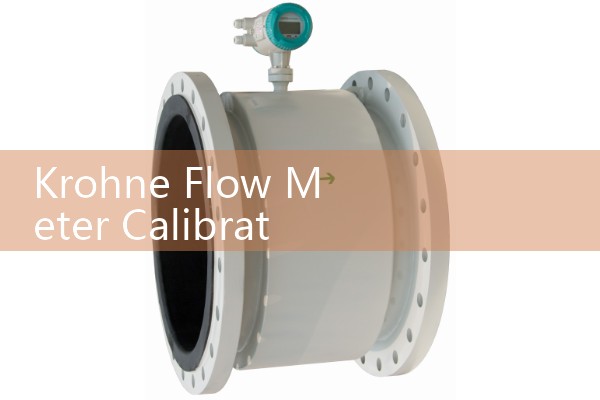
A paint manufacturer in Vietnam ordered a replacement for a Krohne magnetic flow meter on an 80 mm line. The original PDF showed a certified curve on water. The actual fluid was solvent at 4.2 cP and 55 °C. The reading drifted at low batches. We supplied a positive displacement meter with a calibration curve matched to the actual viscosity. That fixed the batch repeatability.
Common Mistakes When Reading a Calibration PDF
One common mistake is mixing K-factor units. A K-factor in pulses per gallon cannot be used directly with a PLC configured in liters. Another mistake is comparing error curves from two meters tested under different conditions. You also need to check the reference standard. An accredited ISO 17025 bench gives more confidence than an in house rig with no traceability. Some users also ignore the zero point. A small zero offset at no flow can shift the whole curve at low flow.
How Silver Automation Instruments Handles Calibration Data
Silver Automation Instruments supplies magnetic, vortex, Coriolis, oval gear, and thermal mass flow meters. Each meter can ship with a factory calibration PDF. The document includes the error curve, K-factor table, test fluid, temperature, and reference standard. We can match common Krohne signal outputs such as 4-20 mA HART, pulse, and RS485 Modbus. We also help you select a meter that will operate inside its certified range, not only at maximum flow.
For a quote on a flow meter with a certified error curve call Silver Automation Instruments at Tel: +86-25-68650347 or WhatsApp: +86-25-52155837. WeChat: +86 15365082610. Send us your pressure (bar), temperature (°C), pipe size (DN), and flow range. We will reply with a short list of suitable meters and their actual calibration limits.
FAQ: Krohne Flow Meter Calibration PDF Questions
What is a K-factor in a Krohne calibration PDF?
A K-factor is the number of pulses per unit of flow. The PDF lists this value so a PLC or totalizer can convert raw pulses to volume or mass.
Why does the error curve matter for a flow meter?
The error curve shows accuracy across the full flow range. A single catalog number like 0.2% may only apply at high flow. The curve reveals the certified low flow limit.
Can I use the same K-factor for different fluids?
Not always. Viscosity, density, and temperature affect the K-factor. Use the K-factor from a calibration PDF matched to your actual fluid conditions.
Does Silver Automation Instruments provide calibration PDFs with K-factors?
Yes. We supply factory calibration documents with error curves and K-factor tables for magnetic, vortex, Coriolis, oval gear, and thermal mass flow meters. Tel: +86-25-68650347.
What information do I need to send for a flow meter quote?
Send us your pressure (bar), temperature (°C), pipe size (DN), and flow range. Add your fluid viscosity if you know it. We will propose a meter that stays inside its certified error curve.
Reading a Krohne flow meter calibration PDF is not about collecting paperwork. It is about knowing where the meter works and where it drifts. If you need a replacement flow meter with a clear certified error curve, contact Silver Automation Instruments. Use the details above and send your process data. We will provide a practical meter selection without guesswork.