

 Current position > News detail
『Daniel Turbine Flow Meter: Heavy Duty Mechanical Liquid Hydrocarbon Probes』Related information(clamp on meter|electromagnetic meter|venturi meterrotameter|orifice meter|ultrasonic flow meter|mass flow meter|coriolis mass flow meter|coriolis flow meter|magnetic flow meter|magmeter flow meter|magflow flow meter|mag meter flow meter|electromagnetic flow meter|vortex flow meter|turbine flow meter|thermal mass flow meter|thermal flow meter|rotameter flow meter)
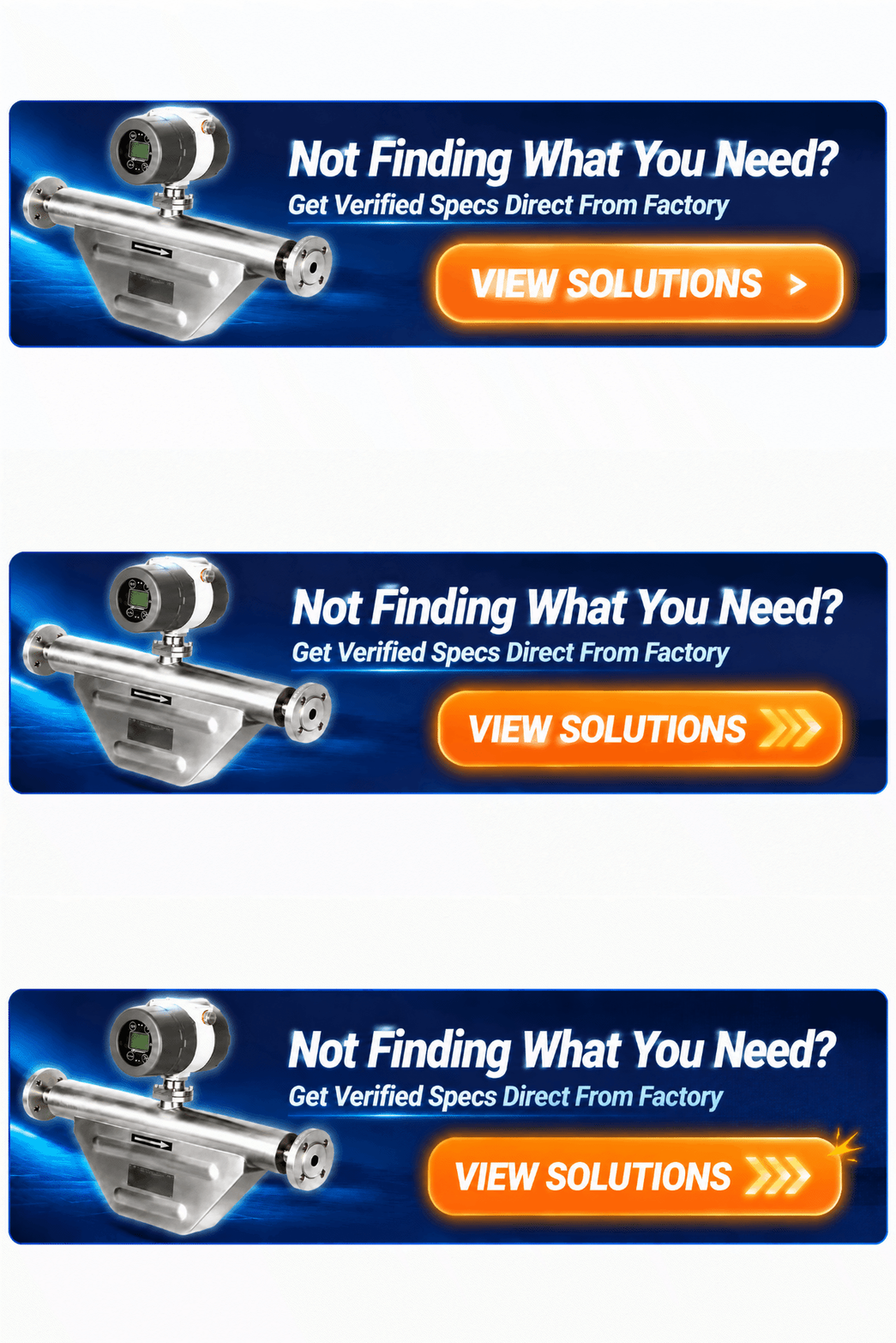
Daniel Turbine Flow Meter: Heavy Duty Mechanical Liquid Hydrocarbon Probes
Quick Answer: A Daniel turbine flow meter with a heavy duty mechanical probe handles clean liquid hydrocarbons such as diesel, crude oil, naphtha, and jet fuel. It provides a pulse output proportional to volumetric flow. Silver Automation Instruments supplies this meter class in DN15 to DN300 sizes for oil and gas, chemical, and marine fuel applications.
Here is the thing. A Daniel turbine flow meter is not a universal meter. We often see engineers compare it to lower cost paddle wheel meters. The difference shows up in the rotor and bearing design. Heavy duty mechanical liquid hydrocarbon probes are built for continuous use at higher pressures and low viscosities. Silver Automation Instruments is a flow meter manufacturer and supplier for this type of hydrocarbon service.
How the Heavy Duty Mechanical Probe Works
In practice a turbine meter has a multi-blade rotor mounted on a shaft. Liquid moves through the meter body and spins the rotor. A magnetic pickup outside the flow path senses each blade pass. The output frequency is linear with volumetric flow. The basic mechanical probe does not need external power.
Most engineers skip the bearing details at first. The bearing material decides service life. For liquid hydrocarbons we commonly use tungsten carbide bearings with stainless steel rotors. Some low flow versions use ceramic bearings. This combination works well for clean fuels and solvents. Solids in the stream will destroy any turbine meter bearing quickly.
Key Specifications for Liquid Hydrocarbon Service
Line sizes run from DN15 to DN300. Accuracy is plus or minus 0.25 percent of reading for liquids above 2 cP. Repeatability is plus or minus 0.02 percent. The standard meter body is 316 stainless steel. Flanges are available in ANSI 150, ANSI 300, ANSI 600, and PN 16 to PN 100.
Temperature range depends on the pickup. A standard magnetic pickup works from -40 °C to 120 °C. A high temperature version can go to 180 °C. Some versions include a PT100 sensor for temperature correction. Pressure rating is limited by the flange, not the rotor. We have supplied meters for 80 bar discharge lines in a Middle East refinery.
Output options include a raw frequency pulse, 4-20 mA HART, and Modbus RTU. The pulse output is best for batching. The 4-20 mA HART version is easier for DCS integration. ATEX Zone 1 and Zone 2 approvals are optional. The standard pickup housing is IP65. An IP67 option is available for washdown areas. For marine fuel transfer many customers ask for the pulse output plus a local totalizer.
Where Daniel Turbine Flow Meter Probes Are Used
We have shipped these meters to a diesel batching skid in Vietnam, a naphtha loading system in Indonesia, and a jet fuel depot in the UAE. The common thread is clean liquid hydrocarbon with viscosity below 5 cP. Above 50 cP the meter becomes nonlinear. For high viscosity oils we recommend an oval gear flow meter instead.
Last year a paint manufacturer in Malaysia needed batch measurement for solvent thinner. The chemical was xylene. The line size was DN25. The meter had
Installation Notes for Mechanical Probes
These meters need a straight run upstream and downstream. For light hydrocarbons we use 10D upstream and 5D downstream. Add a straightening vane if the pipe has elbows, valves, or pumps close to the meter. Air or vapor pockets cause large errors. Install the meter so it stays full of liquid at all times.
A strainer or filter is not optional. A 100 mesh strainer catches rust and scale. We have seen customer sites where a missing strainer killed a new rotor within two weeks. The replacement rotor assembly costs less than the downtime, but the problem is easy to avoid.
Pricing Factors for a Daniel Turbine Flow Meter Replacement
Price depends on line size, flange rating, and output type. A DN25 ANSI 150 meter with pulse output is lower cost. A DN100 ANSI 600 meter with ATEX Zone 1 and 4-20 mA HART costs more. Material upgrades also matter. 316L stainless steel is standard for hydrocarbon probes.
Delivery time for standard sizes is 2 to 4 weeks. Custom flange drilling or special bearing materials may take 6 to 8 weeks. We keep some DN50 and DN80 pulse output meters in stock for urgent diesel transfer jobs.
What liquids can a Daniel turbine flow meter measure?
It measures clean low viscosity liquids such as diesel, gasoline, jet fuel, kerosene, naphtha, light crude, and solvents. Viscosity should be between 0.5 cP and 50 cP. Water and chemicals with no solids also work.
What is the difference between a mechanical probe and a digital turbine meter?
A mechanical probe relies on a magnetic pickup to generate a raw frequency pulse. A digital version adds an amplifier or transmitter to convert frequency to 4-20 mA HART. Both use the same rotor and bearing assembly.
How do I choose the right line size for heavy duty liquid hydrocarbon service?
Pick a size where the normal flow is 20 to 80 percent of maximum rated flow. Do not oversize. A large meter at low flow loses accuracy and shortens bearing life. Send us your pressure in bar, temperature in °C, pipe size in DN, and flow range in m3/h. We will select the correct meter.
What maintenance does a turbine flow meter probe need?
Inspect the rotor and bearing every 6 to 12 months for clean fuels. Replace the bearing kit if the rotor shows axial play. Keep the pickup clean and dry. Do not allow solids or air slugs into the meter.
Can I use a Daniel turbine flow meter for custody transfer?
Yes, many custody transfer skids use this meter class with a prover or master meter. You need the correct calibration certificate and a flow computer. For fiscal oil measurement we recommend an accuracy test every year.
Send your process data to Silver Automation Instruments. Include pressure in bar, temperature in °C, pipe size in DN, flow range in kg/h or m3/h, and the liquid type. We will reply with a specific model and price. Tel: +86-25-68650347. Whatsapp: +86-25-52155837. WeChat: +86 15365082610.