

 Current position > News detail
『2 In Flow Meter: Sizing Two-Inch Industrial Mechanical and Electronic Valves』Related information(clamp on meter|electromagnetic meter|venturi meterrotameter|orifice meter|ultrasonic flow meter|mass flow meter|coriolis mass flow meter|coriolis flow meter|magnetic flow meter|magmeter flow meter|magflow flow meter|mag meter flow meter|electromagnetic flow meter|vortex flow meter|turbine flow meter|thermal mass flow meter|thermal flow meter|rotameter flow meter)
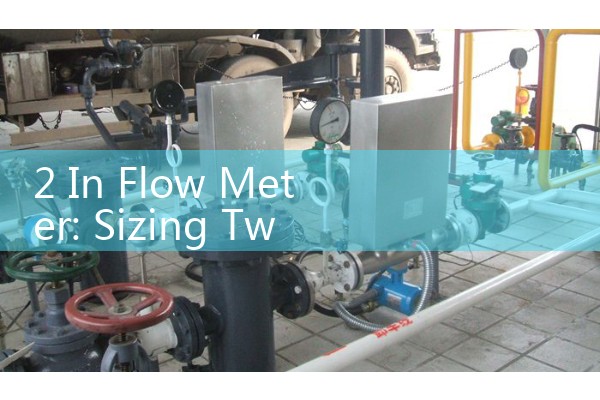
2 In Flow Meter: Sizing Two-Inch Industrial Mechanical and Electronic Valves
Quick Answer: A two-inch flow meter and valve set typically fits DN50 piping. Mechanical valves handle simple on/off and manual throttling. Electronic valves give you 4-20 mA or Modbus control for dosing, blending, and remote operation. Sizing starts with your fluid, pressure, temperature, and full-scale flow range, not just the pipe diameter.
Why 2-Inch (DN50) Is a Crossover Size
Many process lines in Southeast Asia, the Middle East, and Latin America run on DN50 stainless steel or PVC. This size shows up in chemical dosing skids, boiler feedwater lines, edible oil batching, and desalination plant brine loops. We see it often because DN50 gives you a usable flow turndown without the high cost of larger flanged connections. A two-inch line can deliver 1 to 40 m3/h of water, enough for most small and medium industrial processes.
Engineers often pick a 2-inch valve first, then realize the flow meter needs to match. But the meter and valve combination decides accuracy and control quality. If the meter does not see the true flow profile, even a high-end electronic valve will hunt or overshoot. That is why we size both together.
Mechanical vs Electronic Valves: What Changes at 2 Inches
Mechanical valves include manual ball valves, butterfly valves with handles, and mechanical totalizers with preset batch stops. These are simple. A juice blending plant in Australia bought ten 2-inch mechanical batch valves from us last year. They set the stop manually, no PLC, no wiring. It works. Maintenance staff understand it. The accuracy is about plus or minus 0.5 litres per batch, good enough for their 20-litre mixers.
Electronic valves on a 2-inch line are a different animal. You get electric actuated ball valves, V-port control valves, and motorized globe valves with positioners. A typical setup sends a 4-20 mA signal from a flow meter to the valve. The valve modulates between 0 and 100 percent open. In a water treatment plant in Vietnam, we sized a 2-inch electric control valve with a magnetic flow meter. The goal was dosing PAC coagulant at 500 to 3000 L/h. The magnetic meter measured flow. The PLC compared actual flow to setpoint. The valve opened or closed in small steps. This loop kept dosing within 1 percent of target, even when upstream pressure dropped 0.3 bar.
Electronic valves need more data to size right. You must give us the minimum and maximum differential pressure across the valve. You also need to tell us the fluid temperature and viscosity. Many engineers skip the viscosity value for water-like fluids. In practice, if viscosity stays below 10 cP, a standard trim works. Above 50 cP, you need a characterized disc or a wider Cv range. We have seen a food factory in Malaysia try to use a standard ball valve for 800 cP syrup. The valve went from 20 percent open to fully open in a tiny signal change. Control was impossible. We replaced it with a V-port ball with a Cv of 42 instead of 120. After that, they got smooth 4-20 mA control across the whole range.
Flow Meter Pairing for Full Control
For a 2-inch mechanical valve, pairing is less critical. A turbine flow meter or oval gear meter gives you a local pulse signal or a mechanical counter. We supply these with reed switch outputs if the customer wants to add a basic display. The total cost stays low.
For a 2-inch electronic valve, the flow meter must send a fast and stable signal. Magnetic flow meters work well for water, wastewater, and conductive chemicals above 20 microsiemens per centimeter. They have no moving parts and do not add pressure drop. A typical DN50 mag meter from Silver Instruments outputs 4-20 mA HART, measures flow from 0.5 to 50 m3/h, and handles process temperatures up to 120 degrees Celsius with PTFE liners. We also add a PT100 temperature sensor slot if the client needs temperature compensation for mass flow calculation.
If the fluid is non-conductive, like diesel, solvents, or edible oil, you need a Coriolis mass flow meter or a vortex flow meter. A 2-inch Coriolis meter can measure mass flow, density, and temperature with accuracy up to 0.1 percent. That gives the electronic valve a true mass flow setpoint, not a volumetric gue
Real-World Sizing Example
Here is the thing. Most engineers start with the pipe schedule and hope the valve will fit. We start with the process data sheet. A water recycling plant in Mexico sent us this: fluid is filtered greywater, conductivity 800 microsiemens per centimeter, pressure 4 bar, temperature 25 to 40 degrees Celsius, pipe DN50 Sch40. They asked for an automatic flow control loop for a membrane bioreactor feed. Required flow range 5 to 25 m3/h. They wanted 2 percent setpoint accuracy.
We selected a DN50 magnetic flow meter with PFA liner, Hastelloy electrodes, and integral 4-20 mA output. For the valve, we sized a 2-inch electric actuated butterfly valve with a characterized disc. Cv calculated at 95. The differential pressure at max flow was 0.7 bar. The actuator was a 24 VDC modulating type with 4-20 mA input and position feedback. We shipped the set pre-wired on a skid. The customer installed it in one morning. The loop commissioned in ten minutes because we matched the meter K-factor and valve Cv curve in our test report.
Get a Valve and Flow Meter Sized for Your Process
Send us your pressure in bar, temperature in degrees Celsius, pipe size DN, and flow range in m3/h or kg/h. Tell us the fluid name and if you need mechanical totalizing or electronic 4-20 mA control. Our engineers size both the meter and the valve so the loop works from day one. You can call us at +86-25-68650347 or message us on WhatsApp at +86-25-52155837. WeChat is also open at +86 15365082610. We ship to Australia, Vietnam, Malaysia, UAE, Saudi Arabia, Chile, Mexico, and more than 40 other countries.
Frequently Asked Questions
What is the typical flow range for a 2-inch mechanical totalizer valve?
A 2-inch mechanical batch valve normally handles 1 to 40 m3/h for water-like fluids. With higher viscosity, the maximum flow drops. For 500 cP oil, expect around 8 to 25 m3/h. Always check the valve Cv chart against your required flow and pressure drop.
Can I use an electronic control valve on a 2-inch steam line without a flow meter?
Yes, you can. But you lose the ability to control mass flow directly. Most steam systems use a temperature or pressure sensor for feedback. If you want precise steam flow control, pair the valve with a vortex flow meter that handles saturated steam. The meter sends a 4-20 mA signal proportional to mass flow. You then get true closed-loop control.
Which flow meter works best with a 2-inch electronic valve for dosing chemicals?
For conductive chemicals like sodium hypochlorite, ferric chloride, or PAC, a magnetic flow meter is the first choice. It has no pressure drop and no moving parts. For non-conductive solvents or polymer additives, use a Coriolis mass flow meter. The meter directly outputs mass flow, so you dose by weight, not volume. This helps when fluid density changes with temperature or batch.
How do I size a 2-inch valve for high-viscosity fluids above 500 cP?
First, reduce the valve capacity Cv by a viscosity correction factor. For 1000 cP fluid, a standard Cv 120 valve might behave like Cv 40. The best approach is to use a characterized V-port ball valve with a Cv that is only 1.5 to 2 times the maximum required Cv. Do not oversize. A too-large valve will hunt. Tell us your viscosity in cP and we will do the correction for you.
Does Silver Instruments supply both the valve and the flow meter as a pre-tested set?
Yes. We mount the flow meter and the electronic control valve on a common skid. We wire the 4-20 mA loop, set the flow meter K-factor, and stroke the valve to verify linearity. You get a test report with the Cv curve, meter accuracy, and full-scale flow. Installation is two flange bolts and one cable gland. We have supplied these sets for water treatment, edible oil blending, and chemical injection in Vietnam, Indonesia, Australia, and the UAE.